System Cleanse
Power Flushing London: Sludge Cleared From Every Radiator
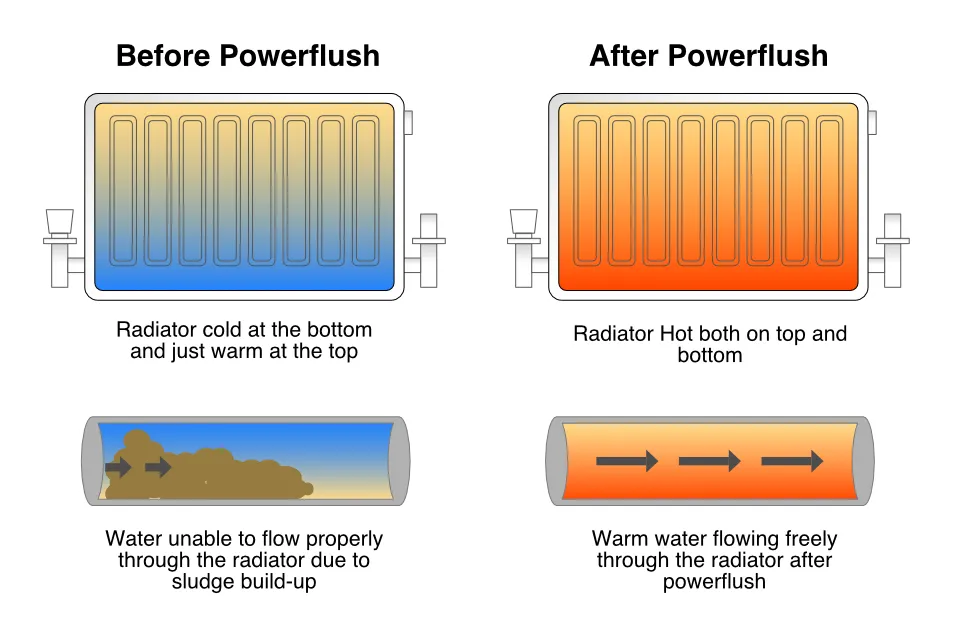
Power flushing clears the sludge behind radiators that are cold at the bottom, a system that needs bleeding every few weeks, or a noisy pump. That is usually sludge, not a fault with any single component: years of magnetite and rust build-up inside pipework and radiators restricts flow and forces the whole system to work harder than it should.
Power flushing costs (typical UK ranges)
| Job | Typical cost | Time |
|---|---|---|
| Power flush, smaller property | From £400 | Most of a day |
| Power flush, larger home | £650–£1,500+ | Full day or more |
Typical UK trade cost-guide ranges, not a quote. Our price is fixed and agreed after a free survey.
A power flush forces a high-velocity, chemically treated water flow through the entire system — every radiator, every run of pipework — to break down and clear that build-up. Done properly, it restores even heat distribution across every room and takes unnecessary load off the whole system, not just one part of it.
This is a whole-system job, independent of boiler brand or age. It's often the single most effective thing you can do for an older system before considering anything more drastic.
Priced as a fixed quote based on system size and radiator count, agreed before we start. See /pricing for the current structure — this is a quote-only service, so figures are confirmed against your system rather than published as a flat rate.
What you get
- Clears sludge, rust and magnetite from radiators and pipework system-wide
- Restores even heat across every radiator, not just the ones nearest the pump
- Reduces pump noise and strain caused by restricted flow
- Chemical inhibitor dosed into the system after flushing to slow future build-up
- Before-and-after flow check so you can see the difference, not just take our word for it
- Works on any boiler brand — this cleans the system, not the boiler itself
How it works
A method, not a guess
01
Diagnose the symptoms
Cold spots, bleed frequency, pump noise and system age tell us how badly sludged the system is before we start.
02
Fixed quote confirmed
A fixed price for the flush, based on system size and radiator count, agreed before any work begins.
03
Flush every radiator and run
High-velocity flow with a cleansing chemical is pumped through each radiator and pipe run in turn, not just the system as a whole.
04
Inhibitor dosed, flow confirmed
Fresh inhibitor is added to protect against future corrosion, and we check heat is now even across every radiator before we leave.
6 things to check before you book power flushing in London
Confirm a fixed-price quote includes all work
A professional quote should be fixed-price and explicitly include chemical cleanser, system inhibitor, and disposal of waste water. Avoid vague estimates that could lead to surprise charges for these essential components. Ask for written confirmation that the price is all-inclusive.
Verify the engineer uses a powerful flushing pump
Effective power flushing requires a pump with sufficient flow and pressure to dislodge sludge. Ask what pump model will be used and ensure it has independent flow and pressure controls. A basic central heating pump is not adequate for a thorough cleanse.
Ask for evidence of system contamination first
A power flush is only needed if there is sludge or magnetite in the system. A reputable engineer should perform a simple magnetic filter check or bleed a radiator to show you the black water. Avoid firms that recommend flushing without demonstrating the need.
Check they will protect your boiler warranty
Some boiler manufacturers require specific chemical cleansers or procedures to keep the warranty valid. Ask the engineer to confirm the products and method they use comply with your boiler maker's guidelines. This protects you from invalidating your cover.
Ensure they test water clarity before finishing
The job is not complete until the water runs clear. A trustworthy engineer will demonstrate this by running water from a radiator into a clear container for you to see. They should also test the system's pH and inhibitor levels post-flush.
Review their company specialisation carefully
Choose a firm that specialises in heating system maintenance, not general plumbing or emergency repairs. This ensures they have the correct equipment and focus for a planned power flush. Be wary of companies that heavily advertise unrelated emergency services.
Symptoms
Signs Your Heating System Needs Power Flushing
A poorly performing heating system often shows clear indicators that a power flush may be required.
- Cold spots at the bottom of radiators
- Discoloured or black water from radiator bleed valves
- Radiators taking a long time to warm up
- Unusual gurgling or banging noises from the system
- Boiler frequently cutting out or cycling
- Some radiators remain cold even when others are hot
Preparing for Your Visit
- 1Ensure clear access to all radiators and the boiler
- 2Note which radiators have cold spots or heat unevenly
- 3Turn off the heating system and allow it to cool completely
When to Book a Power Flush
A power flush addresses system-wide sludge and corrosion. It is the right call when multiple radiators are underperforming, not for a single faulty radiator (which may need balancing or replacement) or for boiler repair issues like leaks or ignition faults.
Book a visitLondon housing stock
Power Flushing for London Property Types
London's diverse housing stock presents specific considerations for effective power flushing.
Victorian terrace
Original pipework and ageing radiators are prone to significant sludge build-up over decades, making a thorough power flush essential for restoring efficient heat distribution.
Mansion-block flat
Shared heating systems and complex, often oversized pipe runs can harbour corrosion and debris, requiring a targeted flush to improve performance.
1930s semi-detached
These homes frequently have a mix of old and newer radiators, leading to uneven circulation that a power flush can rectify by clearing blockages.
New-build extension
Flushing is crucial after construction work to remove welding debris and flux from new pipework, protecting the boiler and ensuring system longevity.
Questions
Power Flushing FAQs for London homeowners
How do I know if my system needs a power flush?
The classic signs are radiators cold at the bottom but warm at the top, needing to bleed radiators regularly, a noisy pump, or a boiler that short-cycles more than it used to. Black or rust-coloured water when you bleed a radiator is a strong confirming sign.
How long does a power flush take?
A typical London home with 8–12 radiators takes most of a working day. Larger systems or heavily sludged ones can take longer — we confirm a realistic timeframe as part of the fixed quote, not an estimate that grows on the day.
Will a power flush fix my boiler?
A power flush cleans the system the boiler sits inside — pipework and radiators — not the boiler's internal components. If a flush resolves symptoms like short-cycling or poor circulation, it's because the boiler was fighting a restricted system, not because anything inside the boiler itself was repaired.
Is power flushing safe for an old system?
Generally yes, though very old or already-leaking pipework can occasionally reveal weak joints once flow is restored to full pressure. We inspect the system before flushing and flag any concerns honestly rather than assuming every system will handle it identically.
How often should a system be power flushed?
There's no fixed interval — it depends on system age, water hardness and how well it's been maintained. As a rough guide, a system showing cold-spot symptoms that hasn't been flushed in 8–10 years is a reasonable candidate.
Explore the cluster
Related heating services & guides
Radiator installation
Correctly sized rads and TRVs
Underfloor heating
Wet systems, new build & retrofit
Smart heating controls
Zoned thermostats, app scheduling
Central heating installation
First-time install, no existing system
System upgrade & rebalancing
Whole-system survey and balance
System balancing
Rebalance flow, room by room
TRV installation
Thermostatic radiator valve fitting
Zone valve installation
Independent heating zones
Magnetic filter installation
System protection after a flush
Pricing
Quote-only, fixed price before we start
Areas we cover
All 33 London boroughs
Guide to central heating systems
The complete system-wide guide
Radiator balancing guide
Why some rooms run cold
Central heating installation guide
First-time install vs upgrade, explained
London-wide
Power Flushing across all 33 boroughs
Same multi-method kit and fixed-fee approach from Barking to Richmond. Pick your borough for local housing detail.
Keep reading
Guides on power flushing
Power Flushing · 4 min read
How Much Does a Power Flush Cost? 2026 Prices for London Homes
A power flush typically costs from around £400 for a flat or small terrace to £1,500 or more for a large house in London. Radiator count, sludge level and access decide where your home sits in that range, and a survey tells you whether you need one at all.
ReadPower Flushing · 6 min read
Chemical Flush vs Power Flush: Which Does Your Heating System Need?
A chemical flush is as good as a power flush only when the system is lightly contaminated. Where radiators are cold at the bottom or the bleed water comes out black, a power flush is the one that actually shifts the sludge.
ReadPower Flushing · 5 min read
Can You Flush Just One Radiator? What It Involves and When It Works
Yes, one radiator can be flushed on its own, either taken off the wall and hosed through or cleaned in place. It works when only one radiator has a problem, but sludge in one radiator usually means the whole system is dirty, and the cleaned radiator soon refills with the same water.
ReadPeople also book
System Upgrade & Rebalancing
Whole-system heating upgrades and rebalancing across London — pipework, pump, radiators and controls assessed together.
Learn moreRadiator Installation
Radiator installation, replacement and upsizing across London.
Learn moreUnderfloor Heating
Wet underfloor heating installation for London homes and extensions — new builds, retrofits and single rooms.
Learn moreReady to sort this room out?
Tell us the room and your postcode. We'll confirm a free survey and, after that, the fixed price and earliest slot — before you commit to anything.
Book a free survey