Guides & advice
Know your heating system
What our engineers wish every London homeowner knew — about radiators, power flushing, underfloor heating and the difference between fixing the symptom and fixing the system.

Radiators · 6 min read
How to Bleed a Radiator, and What to Do When It Won't Bleed
Heating off, key on the bleed screw, a quarter turn anticlockwise until the hiss turns to water, then close it and check the boiler pressure. Here is how to do it, which key fits, and what it means when nothing comes out.
Read guide
Radiators · 6 min read
Leaking TRV? Why Thermostatic Radiator Valves Leak and How They Are Fixed
A leaking TRV leaks from the brass valve body, not the head: the seal around the pin, the nut onto the radiator, the nut onto the pipe or a cracked casting. Finding which one decides whether it is a small nip with a spanner or a new valve.
Read guideRenovation · 7 min read
How Does a Heat Pump Work, and What Does It Need From Your Heating?
A heat pump does not burn anything. It uses electricity to move heat from the outside air into the water in your radiators, and it does that most efficiently at lower water temperatures. That is why the radiators, pipework and water quality matter as much as the unit on the wall outside.
Read guideSmart Controls · 5 min read
What Is Hive Heating, and How Does It Work With Your Boiler?
Hive is a smart heating control system from Centrica, the company behind British Gas. A thermostat, a receiver at the boiler and a hub on your router let you control heating and hot water from an app. It improves control, but it cannot fix a heating system that is unbalanced or full of sludge.
Read guide
System Health · 6 min read
What Are the Different Types of Central Heating Systems?
Most UK homes have a wet system: a boiler or heat pump heating water that flows to radiators or underfloor pipes. The alternatives are electric storage and panel heaters, communal heat networks common in London blocks, and older warm air systems. Knowing which you have tells you what can go wrong and what upgrades make sense.
Read guide
Radiators · 7 min read
How to Balance Radiators: A Step-by-Step Guide
To balance radiators, bleed the system, open every valve, note the order the radiators heat up, then close the lockshield on the fastest radiator to a small opening and open each slower one a little more, checking the pipe temperatures as you go.
Read guideSystem Health · 7 min read
How Central Heating Works: The Flow and Return Loop, Boiler to Radiator
Central heating heats water in a boiler, pumps it through pipes to radiators that warm each room, and brings the cooled water back to be heated again. Controls decide when it runs and how warm the house gets.
Read guide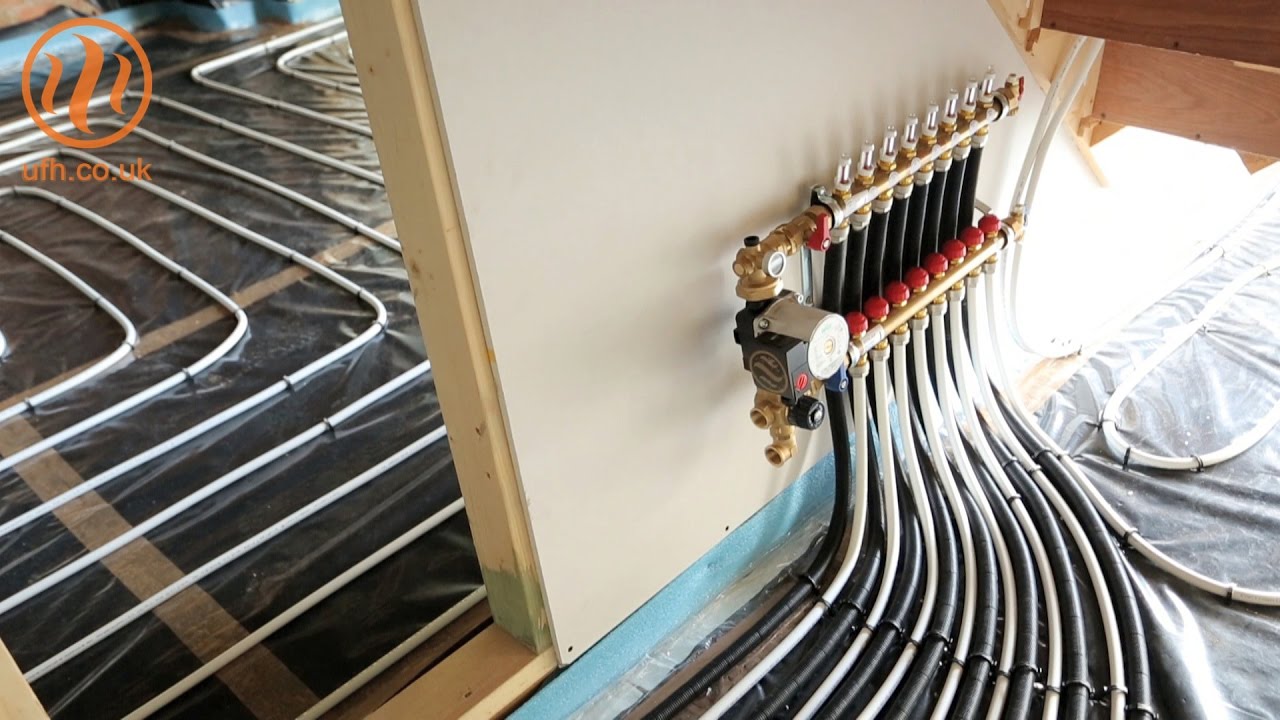
Underfloor Heating · 7 min read
How Does Underfloor Heating Work? Wet and Electric Systems Explained
Underfloor heating turns the whole floor into a gentle, low-temperature heater, using either loops of warm-water pipe fed from a manifold or electric heating cables under the floor finish. It heats slowly and evenly, and the floor covering makes a big difference.
Read guideSystem Health · 6 min read
How Often Does a Heat Pump Need Servicing?
Most manufacturers want an air source heat pump serviced once a year, and many make it a condition of the warranty. A proper service covers the outdoor unit, the refrigerant side, the controls and the water side of the heating system, which is where many performance problems actually start.
Read guide
Power Flushing · 6 min read
Power Flush Machine: What the Equipment Does, and Should You Hire One?
A power flush machine is a portable high-flow pump with a tank, a flow reversal valve and a dump valve, used with cleaning chemicals, a magnetic collector and a water quality meter. You can hire one, but the machine is the easy part; knowing where to connect it, how to work each radiator and when the water is clean is what makes a flush work.
Read guideUnderfloor Heating · 7 min read
Can You Retrofit Wet Underfloor Heating Into an Existing Floor?
Wet underfloor heating can usually be retrofitted into an existing home without digging out the floor. Low-profile boards laid over the existing floor, and systems fitted between timber joists, are the two main routes. The real limits are floor height, insulation underneath and how much heat the room loses.
Read guideSystem Health · 6 min read
Why Are My Upstairs Radiators Cold When Downstairs Is Hot?
When a whole floor stays cold while the other floor heats, the fault is in the system, not in one radiator. The usual causes are trapped air, a stuck zone valve, a weak pump, an unbalanced system, sludge, or an empty feed tank on an older open-vented system.
Read guideUnderfloor Heating · 6 min read
Underfloor Heating Manifold Problems: What Fails and How to Tell
Most wet underfloor heating faults are found at the manifold rather than in the floor. Failed actuators, a stopped pump, a stuck blending valve, blocked flow meters and small leaks at the joints are the usual culprits, and most can be repaired without lifting a single floor tile.
Read guideUnderfloor Heating · 6 min read
Is Electric Underfloor Heating Expensive to Run? Mats vs a Boiler or Heat Pump
Electric underfloor heating usually costs more to run than wet underfloor heating, because a unit of electricity costs several times as much as a unit of gas. Electric still makes sense for a small bathroom used for short spells; for large or daily-used spaces, wet heating is the cheaper system to live with.
Read guideSmart Controls · 6 min read
How Does a Room Thermostat Work? What It Controls and What It Does Not
A room thermostat is a temperature-controlled switch. It measures the air in one room and tells the boiler to stop heating once that room reaches the temperature you set, then calls for heat again when it cools. It does not control how hot the radiators get or how fast the house warms.
Read guideSystem Health · 6 min read
Airlock in Central Heating: Signs, Causes and How It Is Cleared
An airlock is a pocket of trapped air that stops water circulating through part of a heating system. It usually follows draining, low pressure or a leak. Bleeding radiators clears most of them; air that keeps coming back points to a fault that needs finding.
Read guideSmart Controls · 6 min read
Is Honeywell Evohome Worth It? Multi-Zone Heating Control Explained
Honeywell Home evohome is a multi-zone control system that lets each room or area have its own temperature and schedule. It earns its cost in larger or unevenly used homes. In a small flat, or a system that is unbalanced or full of sludge, a simpler control is usually the better choice.
Read guideRadiators · 6 min read
Why Is My Radiator Whistling? Causes and How to Stop It
A radiator that whistles is usually telling you that water is being pushed too hard through a valve that is almost closed. The cause is normally in the system around it, such as TRVs closing, a missing bypass, pump speed or balancing, rather than the radiator itself.
Read guideRadiators · 6 min read
Why Is My Heated Towel Rail Not Getting Hot?
Most heated towel rails that will not get hot are on the central heating and are either full of air, starved of flow by the rest of the system, or cold simply because the heating is off. A few are electric or dual fuel, and those have different faults.
Read guideSystem Health · 6 min read
Is My Central Heating Sealed or Open Vented? How to Tell
If your boiler has a pressure gauge and a filling loop, your heating is a sealed system. If there is a small feed and expansion tank in the loft, it is open vented. The difference decides how the system tops itself up, what goes wrong and how it should be maintained.
Read guideUnderfloor Heating · 6 min read
Can You Power Flush Underfloor Heating? How It Works and What It Costs
Yes, a wet underfloor heating system can be power flushed, but it is done one loop at a time from the manifold rather than through the whole system at once. It helps when loops are clogged with sludge or slime, and does nothing for a failed actuator, pump or thermostat.
Read guide
Radiators · 5 min read
Removing or Moving a Radiator: Decorating, Capping Off or Relocating
Removing or moving a radiator is priced on the pipework, not the radiator. Taking one off the wall to decorate is quick, capping the pipes for good takes longer, and moving it to another wall is the biggest job because new pipe has to be run and the floor made good.
Read guideRadiators · 5 min read
Replacing a Radiator Valve or TRV: Head-Only Swap or Full Drain-Down?
The cost of replacing a radiator valve or TRV depends mostly on whether the system has to be drained. Swapping a TRV head is a small job, changing the valve body means draining down, and doing every valve in one visit is far better value than one at a time.
Read guidePower Flushing · 5 min read
Can You Flush Just One Radiator? What It Involves and When It Works
Yes, one radiator can be flushed on its own, either taken off the wall and hosed through or cleaned in place. It works when only one radiator has a problem, but sludge in one radiator usually means the whole system is dirty, and the cleaned radiator soon refills with the same water.
Read guidePower Flushing · 6 min read
Chemical Flush vs Power Flush: Which Does Your Heating System Need?
A chemical flush is as good as a power flush only when the system is lightly contaminated. Where radiators are cold at the bottom or the bleed water comes out black, a power flush is the one that actually shifts the sludge.
Read guideRadiators · 6 min read
Are My Radiators Big Enough for a Heat Pump?
Many existing radiators are too small for a heat pump because heat pumps run at lower water temperatures. A room-by-room heat loss calculation shows which ones need upsizing; usually it is some rooms, not all.
Read guideRadiators · 6 min read
TRV vs Manual Radiator Valve: What Is the Difference and Is It Worth Switching?
A thermostatic radiator valve cuts the flow as the room reaches the temperature you set; a manual valve stays wherever you left it. For most rooms a TRV is worth fitting, but one radiator on the system often needs to stay manual.
Read guideSmart Controls · 6 min read
What Heating Controls Does a House Need?
A house with a boiler and radiators needs four basic controls: a timer or programmer, a room thermostat, TRVs on most radiators and a boiler interlock. Homes with a hot water cylinder also need a cylinder thermostat and separate hot water timing.
Read guidePower Flushing · 4 min read
How Much Does a Power Flush Cost? 2026 Prices for London Homes
A power flush typically costs from around £400 for a flat or small terrace to £1,500 or more for a large house in London. Radiator count, sludge level and access decide where your home sits in that range, and a survey tells you whether you need one at all.
Read guidePower Flushing · 4 min read
Signs Your Central Heating System Needs a Power Flush
If your radiators are cold at the bottom, you're constantly bleeding them, or your heating is noisy and uneven, your system likely needs a power flush to remove sludge and restore performance.
Read guideRadiators · 3 min read
How Much Does a New Radiator Cost to Fit? Replacement Costs Explained
A new radiator typically costs £100–£300 to replace like-for-like, fitted, and £900–£1,600 for six to eight radiators. The radiator you choose, the labour, and whether the pipework has to move decide where you land.
Read guidePower Flushing · 4 min read
How Often Should a Central Heating System Be Power Flushed?
A power flush isn't scheduled by the calendar but by your system's condition. The need depends on factors like water quality, maintenance history, and visible performance issues.
Read guidePower Flushing · 4 min read
How Long Does a Power Flush Take? What to Expect on the Day
A power flush on a typical London home with 8 to 12 radiators takes a full working day. This guide walks through that day, from the initial assessment to the final inhibitor dose.
Read guideRadiators · 3 min read
Column vs Panel vs Designer Radiators: Are Panel Radiators Worth It?
For most rooms a flat panel radiator is worth it: it is the most cost-effective type and sits slimmest on the wall. Column radiators suit period and high-ceilinged rooms, and designer or vertical models fit narrow walls.
Read guideSystem Health · 3 min read
What Is Radiator Balancing and Why Does It Matter?
Radiator balancing adjusts water flow to ensure all radiators heat evenly, improving comfort and system efficiency. Discover why it's a key part of maintaining a well-functioning heating system.
Read guideSystem Health · 4 min read
Why Is One Room Always Colder Than the Rest? Size, Balance and Zones
A persistently cold room is a common heating headache. This guide helps you diagnose whether the issue is radiator size, system balancing, sludge buildup, or a lack of heating in that zone.
Read guideRadiators · 4 min read
TRVs Explained: Thermostatic Radiator Valves and Room-by-Room Heat Control
TRVs allow you to control the temperature in each room independently. This guide explains how they work, when they need replacing, and how they fit into modern heating systems.
Read guideUnderfloor Heating · 4 min read
Underfloor Heating Installation Cost: Wet vs Electric Systems Compared
Electric underfloor heating costs less to install in a single room, but a wet system is usually cheaper to run across larger areas. Screed vs retrofit, floor area and boiler integration set the final price.
Read guideSmart Controls · 3 min read
Smart Thermostat Installation Cost: Hive vs Nest vs Tado, Installed Properly
Understanding the true installed cost of smart thermostats like Hive, Nest, and Tado is key. Professional installation ensures compatibility, safety, and optimal performance beyond the box.
Read guideRadiators · 4 min read
How to Tell If Your Radiator Is the Wrong Size for the Room
If your radiator is slow to heat, never gets truly warm, or has temperature inconsistencies, it may be undersized. This is a common issue in home extensions and loft conversions where heating needs are miscalculated.
Read guideUnderfloor Heating · 4 min read
Does Underfloor Heating Work With Your Existing Boiler?
In most homes, yes. Underfloor heating runs cooler than radiators, and a blending manifold mixes the boiler's hot flow down to a safe floor temperature. A survey confirms your boiler has the output to cope.
Read guideSmart Controls · 4 min read
Smart Heating Zoning Explained: Room-by-Room Control That Actually Works
Not every home needs a smart radiator on every wall. We explain the practical differences between smart thermostat control, heating zones, and individual radiator valves to help you invest wisely.
Read guideUnderfloor Heating · 3 min read
Can You Add Underfloor Heating to One Room on an Existing System?
Yes. You can add underfloor heating to a single room and run it from your existing central heating, with its own zone and thermostat on the manifold. Your radiators carry on as before. Kitchens, bathrooms and extensions are the usual rooms.
Read guideSystem Health · 3 min read
Preparing for a Heating Survey: What to Check Before the Engineer Arrives
A heating survey is most effective when you're prepared. This checklist helps you gather key details about your system's performance and history before the professional arrives.
Read guideSystem Health · 3 min read
Central Heating System Upgrade vs Boiler Replacement: What’s the Difference
A boiler replacement and a full system upgrade are distinct projects. This guide explains the different scopes of work and why many heating complaints stem from the system, not the appliance.
Read guideRenovation · 4 min read
Extension or Loft Conversion? Why Your Heating System Needs Resizing Too
A new extension or loft conversion changes your home's heating demands. Without resizing your system, you risk uneven temperatures and inefficiency. Plan this work alongside the build, not as an afterthought.
Read guideRadiators · 4 min read
Radiator Cold at the Top, Bottom or All Over? 5 Causes and Fixes
A radiator cold at the top has trapped air and needs bleeding. Cold at the bottom but warm at the top usually means sludge. Lukewarm all over points to poor balancing, a stuck TRV or a closed lockshield valve.
Read guideSystem Health · 4 min read
Why Won't My Heating System Hold Pressure? System-Level Causes Explained
If your heating system won't hold pressure, the cause is often a system-level issue we can resolve, not an internal boiler fault. This guide explains the common culprits and solutions.
Read guidePower Flushing · 4 min read
How Much Sludge Is Too Much? Five Checks That Show How Bad It Is
Determining when sludge requires a power flush involves specific diagnostic checks. This guide details how to assess severity through practical tests and symptoms, helping you plan maintenance effectively.
Read guideSystem Health · 4 min read
Why Does My Heating Take So Long to Warm Up?
Heating that takes longer to warm up than it used to is usually sludge restricting flow or a system that has drifted out of balance. An undersized pump, a badly placed thermostat or a large draughty room cause the rest, and each has a different fix.
Read guideRadiators · 4 min read
TRV Not Working? 4 Thermostatic Radiator Valve Faults and Fixes
A thermostatic radiator valve (TRV) that isn't working usually has a stuck pin: take the head off and the pin underneath won't press down, so the radiator stays fully on or fully off. Worn seats, poor placement and airlocks cause the rest.
Read guideSystem Health · 4 min read
Zone Valve Problems: 4 Symptoms of a Faulty Motorised Valve
A faulty zone valve (the motorised valve that sends heat to each zone) shows up as one zone staying cold, both zones heating together, or a motor that clicks but never moves. Each symptom points to a different part.
Read guideSystem Health · 4 min read
What Does a Magnetic Filter Do and Do You Need One?
A magnetic filter captures sludge and debris in your heating system, improving efficiency and preventing damage. This guide explains how it works and which systems benefit most.
Read guideRadiators · 4 min read
Radiator Sizing Explained: Why BTU Calculations Matter
Choosing the correct radiator size requires precise calculations, not guesswork. This guide explains the key factors in BTU sizing and why a professional survey is essential for optimal heating performance.
Read guideSystem Health · 4 min read
System Rebalancing vs a Power Flush: How to Tell Which One You Need
Uneven heating can be caused by two distinct issues: system imbalance or sludge. This guide helps you identify the specific symptoms of each and explains why a combined approach is often the most effective solution.
Read guideSmart Controls · 4 min read
Smart Heating Controls vs a Traditional Thermostat: What Changes When an Engineer Installs Them
Upgrading to smart heating controls involves more than a simple thermostat swap. A professional installation ensures wiring compatibility, correct zone configuration, and schedules tailored to your home's actual heat loss.
Read guideSystem Health · 4 min read
Noisy Radiators and Pipes: What the Different Sounds Mean
Gurgling usually means trapped air, ticking is pipework expanding as it heats and cools, banging is often water hammer from a valve, and whistling points to a part-closed valve or a pump running too fast.
Read guideSystem Health · 4 min read
How Long Does a Whole-System Heating Survey Take?
A professional heating survey for your London home typically takes 60 to 90 minutes. The duration depends on your property size, system complexity, and specific requirements for radiators, underfloor heating, and controls.
Read guideSystem Health · 4 min read
Should You Repressurise Your Own System, or Call an Engineer?
Topping up pressure after bleeding a radiator is often a safe DIY job. However, if your system needs frequent repressurising, it's a sign of an underlying fault that needs professional investigation.
Read guideRenovation · 6 min read
Unvented Hot Water Cylinder Installation in London Explained
An unvented cylinder installation is notifiable work under Part G of the Building Regulations, and its performance is decided by your incoming cold main long before anyone chooses a model.
Read guideSystem Health · 5 min read
Unvented Cylinder Repair or Replacement: How to Decide
Most unvented cylinder faults are in the valves and vessel around the cylinder, not the cylinder itself. Knowing which is which is the difference between a part swap and a notifiable replacement.
Read guideSystem Health · 6 min read
Low Hot Water Pressure From an Unvented Cylinder: Causes and the Tap Test
Low hot water pressure from an unvented cylinder is a restriction, not a setting: the cylinder passes mains pressure on and cannot create it. One comparison at the kitchen tap tells you whether the problem is your incoming supply or the hot side.
Read guideRenovation · 5 min read
What Size Hot Water Cylinder Do You Need? London Guide
Cylinder sizing is two questions, not one: how much hot water you store, and how fast it can be drawn and replaced. Getting either wrong shows up in the shower.
Read guideRadiators · 7 min read
Leaking Radiator? Finding the Source and What to Do Next
Most radiator leaks come from a valve, the joint between valve and radiator, or the bleed screw. Where the water starts, not where it drips, decides whether it is a quarter-turn fix or a new valve or radiator.
Read guideRadiators · 6 min read
What Is a Lockshield Valve? How It Works and When to Adjust
The lockshield is the capped valve at the opposite end of the radiator from the TRV. It is not an on/off control: it sets how much flow that radiator gets, which is why fiddling with it can leave other rooms cold.
Read guideRadiators · 6 min read
Which Radiator to Bleed First, and Should It Be Hot or Cold?
Bleed with the heating off and the radiators cooled, work downstairs first starting furthest from the boiler, then upstairs, and check the pressure at the end. If radiators need bleeding every week, air is not the real problem.
Read guideRadiators · 7 min read
How to Drain a Radiator, and When the Whole System Needs It
A single radiator can usually be drained on its own by closing both valves and letting it empty through the union nut. A full system drain-down is a bigger job with more to go wrong on the refill.
Read guideSystem Health · 6 min read
When to Turn the Heating On in the UK, and What to Check
Go by the temperature indoors, not the date. Most UK homes switch on somewhere between late September and October, and a short test run before the first cold week is the easiest way to find faults while there is still time to fix them.
Read guide