Does Underfloor Heating Work With Your Existing Boiler?
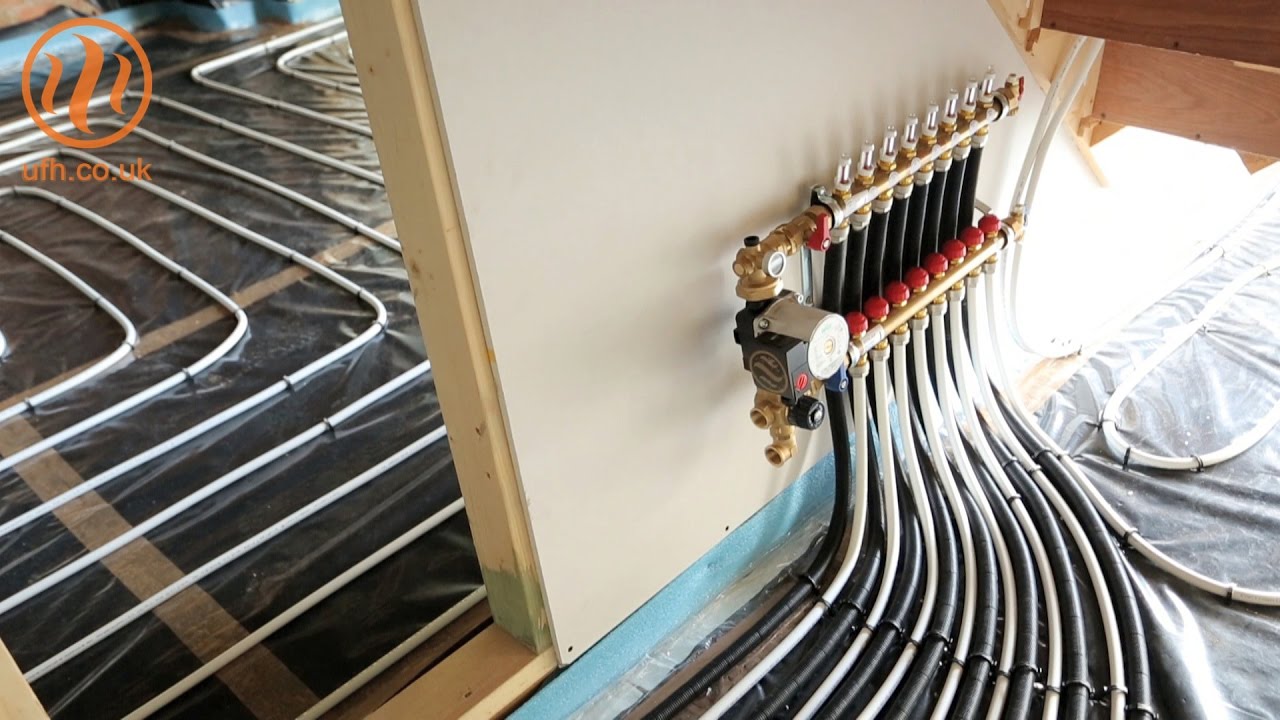
In most homes, yes. Underfloor heating runs cooler than radiators, and a blending manifold mixes the boiler's hot flow down to a safe floor temperature. A survey confirms your boiler has the output to cope.
Understanding the Flow Temperature Difference
A traditional radiator system is designed to operate at relatively high water temperatures, often between 65°C and system maximum. This high temperature is necessary for the radiator's compact surface area to emit sufficient heat into a room. In contrast, underfloor heating (UFH) uses the entire floor area as an emitter, meaning it can operate effectively at much lower flow temperatures, typically between 35°C and 55°C.
This lower operating temperature is a core principle of UFH efficiency and comfort. Running your new underfloor system at the same high temperature as your radiators would not only be inefficient but could also damage floor coverings and create an uncomfortably warm environment. The key to a successful integration lies in safely and effectively reducing the boiler's output temperature for the UFH circuits.
The Role of the Blending Manifold
This is where the system's blending manifold becomes critical. The manifold is the central distribution unit for the underfloor heating. Its primary function is to mix the high-temperature water from your boiler with cooler water that has already circulated through the floor loops. This process creates the ideal, lower-temperature flow for the underfloor pipes.
A typical manifold includes pumps, blending valves, and thermostatic controls. It acts as an interface between your boiler's high-temperature output and the delicate, low-temperature requirements of the floor. Without this component, or with an incorrectly specified one, your boiler's output would be directly fed into the floor, which is unsuitable.
Key Components on the Manifold
- Mixing Valve: Precisely blends hot supply water with cooler return water.
- Circulation Pump: Ensures consistent flow through the often lengthy and complex UFH pipe circuits.
- Thermostatic Controls: Maintain the target flow temperature automatically.
- Zone Actuators: Allow individual room or area control, enhancing efficiency.
Why You Cannot Assume Compatibility
While the manifold solves the temperature issue, it does not automatically guarantee your existing boiler is suitable. The boiler must have the capacity and control features to work in tandem with the UFH system. An older boiler, for example, might not modulate its output low enough to work efficiently with a system designed for lower temperatures, leading to short cycling and reduced efficiency.
The physical connection also matters. The boiler must have an available connection point for the UFH system's supply and return pipes. Furthermore, the boiler's overall output (measured in kW) must be sufficient to handle the combined heating load of any remaining radiators and the new underfloor heating zones, especially during the coldest weather.
The Importance of a Professional Survey
This is why a professional compatibility survey is an indispensable step, not an optional extra. A qualified heating engineer will assess several key factors that go beyond a simple yes or no answer.
During a survey, the engineer will evaluate your boiler's make, model, age, and current condition. They will calculate the total heat demand of your property, including the proposed UFH areas, to ensure your boiler has adequate output. They will also check the system's hydraulic design—how the water will flow between different heat emitters—to ensure balanced performance across all zones.
Relying on assumptions can lead to an underperforming system, reduced comfort, and potential strain on your boiler. The survey provides the technical foundation for a successful installation, ensuring all components are correctly specified and your investment delivers the expected comfort and efficiency.
Planning for a Successful Integration
If you are considering adding underfloor heating, the process should begin with research and professional consultation. Discuss your goals with a specialist who can explain the requirements specific to your home. They can outline whether your current system is compatible or if any upgrades, such as a boiler replacement or additional controls, are recommended to optimise the new UFH.
This planned approach ensures your underfloor heating works harmoniously with your existing boiler, providing gentle, even warmth and improved efficiency for years to come. It transforms what could be a complex technical challenge into a smooth, well-managed home improvement project.
How Underfloor Heating Is Added to an Existing Central Heating System
In most homes the underfloor circuits are connected to the existing heating flow and return pipework, with the manifold and its mixing valve doing the job of bringing the temperature down. Where the connection is made depends on the size of the area and the pipework available.
- Whole floor or several rooms: a full manifold is usually connected close to the boiler on pipework large enough to carry the extra flow, and wired in as its own heating zone.
- One room, such as a kitchen extension or bathroom: a compact single-zone mixing unit can sometimes be taken from a nearby radiator circuit, provided that circuit can supply enough heat. Our article on adding underfloor heating to just one room covers this in more detail.
Combi Boilers
Underfloor heating works with a combi boiler. The main thing to understand is that a combi puts hot water first, so the heating pauses while a tap or shower is running. Because a warm floor holds its heat, most people never notice the pause.
System and Regular Boilers
With a system or regular boiler, the underfloor heating is normally added as a separate zone with its own motorised valve and thermostat, alongside the existing heating and hot water zones. The wiring centre then tells the boiler to fire when any zone calls for heat.
When the Existing System Needs Work First
A survey sometimes finds that the boiler can cope, but the system around it needs attention before new pipework goes in. Typical examples:
- Dirty system water: underfloor pipe runs are long and narrow, so sludge from old radiators can restrict them. A power flush and a magnetic filter are often recommended before the new circuits are connected.
- A boiler already struggling on the coldest days: if some rooms never get warm now, adding more load will make that worse.
- Controls that cannot take another zone: an old programmer or wiring centre may need replacing so the new area can be controlled on its own.
If you are still weighing up the type of system, our comparison of wet and electric underfloor heating costs sets out where each makes sense, and the underfloor heating guide covers the whole process from design to commissioning.
Want to know if your boiler can take underfloor heating? We check the boiler output, pipework and controls on a survey and tell you plainly what, if anything, needs changing first. See our underfloor heating installation service for how the work is carried out. Book a free survey and you will get a fixed written quote before any work is agreed.
Frequently asked questions
Can I use my existing thermostat with a new underfloor heating system?
It is unlikely. Underfloor heating requires specialised thermostats and control systems designed for its slow response time and floor-sensing capabilities. A professional installer will recommend and fit appropriate room thermostats and programmers that integrate with the manifold for optimal zone control and efficiency.
Will adding underfloor heating to my boiler make it less efficient?
If correctly designed and installed with a proper blending manifold, adding underfloor heating can improve overall system efficiency. UFH operates at lower flow temperatures, which can allow a modern condensing boiler to run in its more efficient condensing mode more frequently. However, this depends entirely on a correct system design and boiler compatibility.
How long does it take for underfloor heating to warm up a room compared to radiators?
Underfloor heating has a significantly slower response time. While a radiator can heat a room in minutes, a UFH system may take a few hours to reach its target temperature from cold due to the thermal mass of the floor. This is why it is typically operated on a set-and-forget schedule, not turned on and off like a radiator.
Can you add underfloor heating to an existing central heating system?
Yes, in most homes. The underfloor circuits are connected to the existing heating pipework through a manifold with a mixing valve that lowers the water temperature. A survey confirms the boiler has enough spare output and that the pipework and controls can support a new zone.
Does underfloor heating work with a combi boiler?
Yes. A combi gives priority to hot water, so the underfloor heating pauses briefly while taps are running, but because the floor stores heat the pause is rarely noticeable. The boiler still needs enough output for the radiators and the new floor area together.
What if my boiler cannot support wet underfloor heating?
For a single small room, electric underfloor heating runs independently of the boiler and avoids the question altogether, although it usually costs more to run. For larger areas the options are upgrading the boiler or reducing the area served, which a survey will help you compare.